The quest for a reliable mobility solution often leads care teams and families to a critical junction: the decision to purchase a sit to stand lift. These devices are not just pieces of equipment; they represent a fundamental shift in how we approach patient handling. When you begin exploring a sit to stand lift for sale, you are investing in dignity, safety, and operational efficiency. Unlike full-body lifts that handle completely dependent patients, sit to stand lifts are specifically engineered for individuals who possess some weight-bearing capacity in their lower extremities. This distinction is crucial. The mechanism works by encouraging the patient to engage their own muscles, rising from a seated position with assistance from a padded sling and a stable lifting frame. This active participation helps maintain muscle strength and circulation, which is vital for long-term rehabilitation. Furthermore, these lifts significantly reduce the biomechanical stress on caregivers, who often face debilitating injuries from manual lifting. The engineering behind these units focuses on stability, with wide bases and anti-slip footplates, ensuring that the transfer is secure for both the user and the assistant. From a financial perspective, acquiring a sit to stand lift is a strategic move for any facility or home care environment. It minimizes workers' compensation claims related to back injuries and improves patient satisfaction by promoting autonomy. Whether you are managing a small assisted living facility or outfitting a private home, understanding the specific applications of this device is the first step toward making a wise purchase.
Understanding the Mechanics and Medical Necessity of Active Lifts
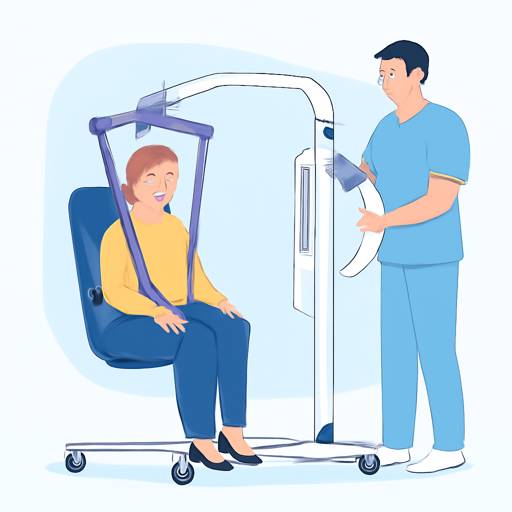
To fully appreciate the value of a sit to stand lift for sale, one must look beyond its basic function and examine the underlying mechanics. These lifts operate on a simple yet effective principle: they assist a natural human movement. The patient starts seated, typically in a wheelchair or on the edge of a bed. The lift’s footplate is positioned under their feet, and the knee pad is placed firmly against their knees to prevent sliding forward. A specially designed sling is secured around the patient’s back and under the arms. As the lift arm raises, it gently pulls the patient forward and upward into a standing position. This action is not passive; the patient uses their own leg muscles to push upward, making the transfer a collaborative effort. This mechanism is why these devices are often called "assisted standing lifts." The medical necessity for such a device is robust. For patients recovering from hip or knee surgery, a sitting transfer without weight-bearing is dangerous. The sit to stand lift allows for controlled partial weight-bearing, which is exactly what physical therapists prescribe. It also plays a critical role in toileting and bed mobility, two areas where falls frequently occur. From a facility perspective, the investment in a sit to stand lift for sale directly correlates with better outcomes in fall prevention programs. By providing the necessary support, caregivers can encourage patients to stand and pivot safely, rather than attempting risky independent transfers. The design also considers hygiene and ease of cleaning, with frames that are easy to wipe down and slings that are machine washable. When considering purchasing a sit to stand lift for sale, it is essential to evaluate the unit’s capacity and the quality of the knee pad cushioning, as these factors directly impact patient comfort and transfer success.
Critical Features to Evaluate When Shopping for a Lift
Navigating the market for a sit to stand lift for sale requires a discerning eye for specific features that separate high-quality, safe equipment from budget models that may compromise safety. The first and most critical factor is the weight capacity. Standard units handle 400 to 450 pounds, but some bariatric models extend to 500 or 600 pounds. Never underestimate the patient’s weight, as a lift used beyond its capacity is a hazard. Next, consider the leg opening width. A lift must be able to straddle a standard wheelchair or commode. Some models offer adjustable leg spread, which provides versatility but may add weight. The lifting range is another vital specification. The lift must have sufficient stroke to raise a patient from a low wheelchair to a standing position and then lower them back down safely. Battery operation is now the standard. Look for a sealed lead-acid or lithium battery system that provides a full day’s worth of transfers on a single charge. A low battery indicator is non-negotiable. The base construction should be of heavy-duty steel with a powder-coated finish to resist corrosion and withstand frequent use. The control system should be intuitive, typically with a simple up/down button on the hand control. Some advanced models offer programmable limits to prevent over-extension. The sling system is equally important. While the lift frame is the hardware, the sling is the interface with the patient. A good sling is made of breathable, durable material like polyester mesh. It should have multiple size options (small, medium, large, and bariatric) and be designed to accommodate various body shapes. The attachment loops must be clearly color-coded or labeled to facilitate correct positioning. An often overlooked but crucial feature is the emergency manual lowering mechanism. In the event of a power failure, the caregiver must be able to safely lower the patient using a hand crank or release valve. Finally, the mobility of the unit itself matters. Large, swiveling casters with brakes are essential for maneuvering through doorways and over thresholds. A well-designed unit will have a tight turning radius. When you search for a sit to stand lift for sale, prioritize units from manufacturers who provide clear documentation on these specifications and offer comprehensive warranties. Avoid units with vague safety ratings or poorly constructed plastic components. The cost of a quality lift is an investment that pays dividends in safety and durability.
Real-World Applications: Case Studies in Different Care Settings
The versatility of a sit to stand lift becomes apparent when examining its application across diverse care environments. One compelling example comes from a skilled nursing facility that previously relied on manual two-person transfers for ambulatory patients with dementia. The staff reported frequent minor injuries and a high rate of patient resistance during transfers. After procuring a sit to stand lift for sale and training all shifts, the facility saw a dramatic change. The lift provided a consistent, predictable method for transfers, which reduced patient anxiety. Caregivers reported feeling less physical strain, and the incidence of staff back injuries dropped by 40% within the first six months. The patients, who could participate by holding the lift handles, retained a sense of control, improving compliance with rehabilitation schedules. A different case study involves home care for a middle-aged individual recovering from a spinal cord injury who had partial lower extremity function. The caregiver, the patient’s spouse, was struggling with manual lifts. They purchased a portable sit to stand lift that could be easily folded and stored. This device enabled the spouse to transfer the patient safely from the bed to a wheelchair and from the wheelchair to a commode, all without outside help. The key was the lift’s lightweight aluminum frame and compact footprint, which was crucial for maneuvering in a standard bathroom. The patient’s physical therapist noted that the consistent use of the lift helped maintain the patient’s quadriceps strength, which was critical for their long-term walking goal. In a third scenario, a bariatric rehabilitation center used a heavy-duty sit to stand lift to manage post-surgical transfers for patients weighing over 350 pounds. The lift’s widened base and reinforced frame prevented tipping and provided the stability needed for safe pivoting. The facility’s director highlighted that the purchase of multiple units directly reduced the number of falls during transfer attempts, a major liability risk. These examples underscore that the value of a sit to stand lift extends far beyond convenience; it is a tool for improving clinical outcomes, enhancing caregiver well-being, and maintaining patient dignity across a spectrum of needs. When evaluating a sit to stand lift for sale, these real-world applications illustrate why features like bariatric capacity, portability, and ease of use are not luxuries but necessities.